
As software delivery accelerates and AI reshapes how work gets done, engineering teams are being forced to rethink some of their most foundational assumptions. Skills that once defined success are shifting. Roles are blurring. Assessment techniques are under scrutiny. And leaders are asking hard questions: What does it mean to build a strong engineering team today and how do we design teams for what’s next?
Building Engineering Teams at QCon London 2026 explores how organizations are adapting team structures, hiring signals, career progression, and ownership models in response to AI’s growing influence across the software lifecycle. We’ll examine what teams are actually doing to adopt AI today.
Building Engineering Teams includes:
- Structures: Matthew Skelton, one of the authors of Team Topologies, opens with Team Topologies as the “infrastructure for agency” in an AI-enabled world. His talk showing how bounded contexts, cognitive load, and clear interaction modes provide the guardrails that allow both humans and AI to contribute effectively without creating chaos.
- Roles: Lada Indra takes us into the collapsing boundary between engineering and data, sharing real stories about shared ownership, debugging across ML systems, and what senior engineers now need to understand to operate confidently across the stack.
- Ladders/Progression: Alasdair Allan challenges traditional career ladders in “The Ladder Is Missing Rungs,” exploring how AI disrupts the gradual skill accumulation model and what competencies now truly differentiate junior, mid, and senior engineers.
- Hiring: Reece Nunn of the BBC reframes hiring as a measurement problem, examining how AI distorts traditional hiring signals and how teams can deliberately design interview processes that reflect real-world engineering judgment.
- Adopting: Krystal Flores closes with a practical guide and bringing AI into teams. She discusses the shift in mindset: moving engineers from passive tool users to intentional orchestrators. She does this by not discussing AI as a tooling upgrade, but as a redefinition of modern engineering capability and responsibility. She goes into measures and roadmaps found in executing the program at Crunchyroll
We’ll also dedicate space for an interactive unconference session, where we surface the real tensions leaders are facing and work through them together. This is a grassroots, get your burning questions answered, session.
Designed for engineering leaders, architects, managers, and senior individual contributors, Building Engineering Teams at QCon London blends team design, progression frameworks, hiring strategy, and evolving expectations into one cohesive conversation about Building Engineering Teams (in the Age of AI). Attendees will leave with clearer mental models and practical ideas for building resilient, effective engineering teams in a world where AI is no longer optional but foundational.
From this track
Team Topologies as the 'Infrastructure for Agency' with AI
Tuesday Mar 17 / 10:35AM GMT
The book Team Topologies Second Edition (2025) demonstrates convincingly that organizing business and technology for fast flow of value via empowered teams produces outsized results for enterprises worldwide.

Matthew Skelton
CEO & Principal @Conflux, Co-Author of "Team Topologies", Leader in Modern Organizational Dynamics for Fast Flow
Blurring the Lines: Engineering & Data Teams in the Age of AI
Tuesday Mar 17 / 11:45AM GMT
Every senior engineer knows the feeling: a model makes a bad decision, a customer complains, and suddenly you're debugging a system that spans three teams, two pipelines, and a machine learning model nobody fully owns. Where do you even start?

Lada Indra
Head of Data Platform @Pleo, Previously Head of Data @Legend and Director API Platform BI & Data @Vonage
The Ladder Is Missing Rungs: Engineering Progression When AI Ate the Middle
Tuesday Mar 17 / 01:35PM GMT
Career progression in engineering has traditionally followed a predictable path: junior tasks teach fundamentals, mid-level work builds judgment, senior roles require synthesis across systems.

Alasdair Allan
Scientist, Author, Hacker, Maker, Journalist, CTO @Negroni Venture Studios, Interim CTO @Evaro
Rethinking Your Engineering Hiring Process & Signals for the AI Era
Tuesday Mar 17 / 02:45PM GMT
AI has distorted the signals we rely on to hire engineers. CVs are increasingly tailored, screening can be rehearsed, tech tests can look “perfect,” and even system design and behavioural answers can be polished in ways that don’t reflect real on-the-job judgement.
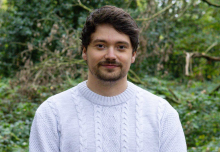
Reece Nunn
Software Engineering Manager @BBC
Unconference: Building Engineering Teams
Tuesday Mar 17 / 03:55PM GMT
From Copilots to Orchestrators: A 12 Week Playbook for Training Engineering Teams Using AI
Tuesday Mar 17 / 05:05PM GMT
Most engineering teams are stuck treating AI as autocomplete. Engineers have GitHub Copilot installed (or Claude or Cursor or whatever), they're generating snippets faster, but leaders can't connect usage to business outcomes—and developers are shipping code they don't fully understand.

Krys Flores
Staff Software Engineer @Crunchyroll, Previously @Carta, @Lob, @Simple Habit, and @Nordstromrack.com|HauteLook